
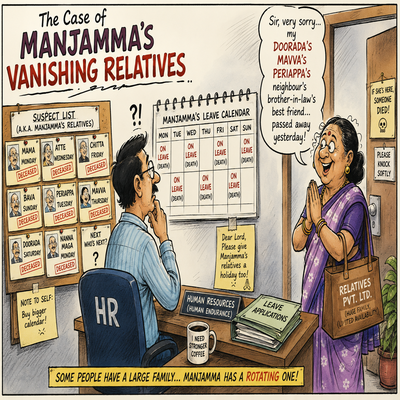
“Is Manjamma’s work good?” my new neighbour asked me.
This lovely young family had just relocated to India, and the lady was rediscovering the luxury of having domestic help.
“Manjamma’s work is excellent,” I answered honestly. “When she comes.”
The lady didn’t think to ask what I meant by that little addendum. We went on to discuss timings and salaries, grocery shopping and milk deliveries, and all the other nitty-gritties of running a house in a suburban community ignored by Zomato and Swiggy.
And happily moved on with our day.
A few days later—
“Has Manjamma come to your place?” my neighbour asked anxiously.
“No,” I replied. “Not for the past couple of days. Her uncle has passed away.”
“Oh,” the lady said. “I didn’t know…”
The next month, I called my neighbour.
Before I could speak, she said brightly, “Good morning! Manjamma hasn’t come today. Her uncle has passed away.”
And so it went on.
Manjamma steadily worked through a score of uncles and aunts. Once, it was her grandfather.
Her brother called me one evening and asked to speak to her.
“How will she come today for work? Your grandfather has passed away, right?” I asked.
“Which grandfather?” he asked, astonished.
“Well, since it’s your grandfather, I wouldn’t know which one,” I replied.
He recovered quickly. “Oh, that grandfather,” he said, and cut the call.
Manjamma continues to eliminate sundry relatives, close friends, and neighbours.
I tried asking her to let her poor friends and relatives live out their natural lives in peace.
Didn’t work.
My neighbour and I still check with each other every other week.
And we don’t have the heart to let her go—because her work is truly excellent.
Ah.
It’s past nine.
No Manjamma.
I’ve got to run.
I hope it’s a tyre puncture holding her back—and not the untimely demise of some poor soul innocently going about their daily chores.