
Krishna, my 10-year-old son, is not “normal.”
I wonder if your first reaction to this statement is:
Why is she dissing her own son?
I am not.
Krishna is on the autism spectrum; he is neurodivergent.
Don’t think—worse! She’s dissing those poor neurodivergent people!
Rewind.
Let’s look at the Merriam-Webster definition of “normal.”
Normal
Adjective
: conforming to a type, standard, or regular pattern
: characterized by that which is considered usual, typical, or routine
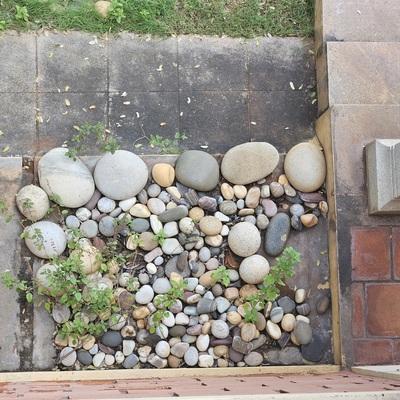
If you see a thousand round stones and a single rectangular stone in the middle, which shape would you say is normal for stones?
Round or rectangular?
And there, dear reader, is your answer.
“Normal” is simply a reflection of statistical majority.
Neurodivergent people do not form a majority of the population.
Now let’s go back to that pile of stones.
Are the round stones “good” or “right”?
Is the rectangular stone “wrong” or “bad” for being rectangular?
Is there any morality attached to round or rectangular?
They are just shapes.
Different shapes.
And yet, the moment we move from stones to people, something changes.
Neurodivergent and neurotypical are terms—labels, if you will—to describe human brains that function differently.
But somewhere along the way, “different” quietly becomes “less.”
Not always consciously.
Not always intentionally.
But often enough to matter.
And that shift does not happen in definitions.
It happens in daily life.
In the way people look at Krishna before they look at me.
In the way advice is offered—quickly, confidently, without context.
In the way behaviour is interpreted, not as communication, but as something to be corrected.
And underlying all of this, often without being spoken aloud, is that one word.
“Normal.”
And different, dear reader, isn’t intrinsically good or bad, right or wrong, more or less.
It is just different.
“Normal” carries no inherent goodness.
It simply reflects what is common.
The rectangular stone is still a stone.
Krishna is still a child.
With needs.
With emotions.
With ways of experiencing the world that may not always align with what is typical—but are no less real.
“But neurodivergence needs awareness, understanding, sensitivity… so it isn’t ‘normal’,” you may say.
And we are back to that word again.
Let’s shift the metaphor slightly.
Suppose you are embedding those stones into a building façade.
You design round settings, because that is what most of the stones look like.
The rectangular stone will not fit into a round setting.
Not because it is wrong.
But because the system was not built with it in mind.
This is where the problem lies.
The neurodivergent minority is expected to fit into a neurotypical setting.
And when that does not happen, the effort often goes into reshaping the individual… rather than questioning the setting.
But forcing that fit can be harmful.
Not always visibly.
Not immediately.
But deeply.
And yet, the world continues to function this way.
Because the majority defines the structure.
And so yes—there is a need for awareness.
For sensitivity.
For understanding.
Not because neurodivergence is “abnormal.”
But because the world is not designed for it.
And awareness, sensitivity, and kindness are not statistical traits.
They are moral choices.
Choices that the majority has the power to make.
PS: Did you know that left-handed people were once considered evil—spawns of the devil—simply because they were different?
The word “sinister” comes from left-handedness.
Left-handed people are different.
A minority.
And history shows us something uncomfortable, but important:
We often fear, distrust, or try to correct what we do not understand.
Until, slowly, understanding changes the way we see.